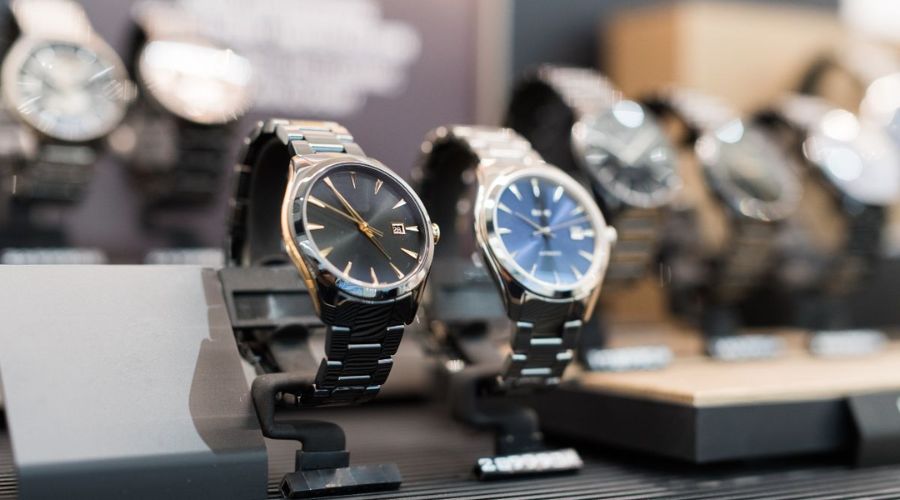
Let's be honest — finding a watch factory in China is not the hard part.
A quick search on Alibaba or Made-in-China will return hundreds of results within minutes. Every listing looks professional. Every supplier claims years of experience, strict quality control, and a satisfied roster of international clients. The photos are polished. The sample prices are reasonable. And almost all of them will tell you exactly what you want to hear.
The hard part is figuring out which ones actually mean it.
Here’s a scenario that plays out more often than most people in the industry will admit: a brand founder — maybe a first-timer, maybe someone who’s done this before in a different product category — goes through the usual steps. They compare quotes, ask for samples, and receive a prototype that honestly looks pretty good. They move forward. They pay a deposit on the first production run. Then the batch arrives, and things start to unravel. The finishing is inconsistent. The crown feels loose. Two weeks later, a customer emails to say their watch stopped running. The supplier’s response? Slow, evasive, and ultimately unhelpful.
The problem wasn’t the sample. It never is. The problem was that due diligence stopped at the sample stage — and with a precision product like a watch, that’s precisely where it needs to begin.
Watches are not t-shirts or tote bags. Every unit contains dozens of interlocking components — movement, case, crown, crystal, gaskets, dial, hands — and a failure in any one of them can quietly destroy the reputation of a brand you’ve worked hard to build. A factory that can produce one impressive prototype is not necessarily a factory that can maintain that standard across 500 units, or 2,000, or when your back is turned during Chinese New Year.
This guide is designed to change the way you approach factory selection. We’ll walk you through the red flags that signal a manufacturer is not what they claim to be, what a genuinely trustworthy OEM watch factory looks like in practice, and the specific questions and steps that should be part of your due diligence before you commit to a OEM watch manufacturing order..
Whether you’re launching your first watch brand, expanding an existing line, or simply looking to switch manufacturers after a bad experience — this is the framework that will help you get it right.
Why Vetting a Watch Factory Actually Matters
You might be thinking: I’ll just order a sample first. If it looks good, I’ll move forward. That’s the sensible approach, right?
It is — but it’s also incomplete. And in the watch industry specifically, an incomplete vetting process is where most sourcing disasters begin.
Here’s the thing about samples: they’re almost always the best work a factory will ever show you. When a new client is on the line, factories put their best hands on the job. They use the best available movement. They take their time on the finishing. That sample is essentially a job interview — and factories know how to dress for the part.
Mass production is a completely different environment. Speed matters. Margins are being managed. The senior technician who built your prototype might not be anywhere near your production run. If there’s no robust quality control system in place — one that operates independently of whether they’re trying to impress you — the gap between your sample and your actual batch can be significant.
The stakes are higher with watches than most other products
A poorly printed t-shirt is a disappointment. A watch that fails is a different kind of problem entirely.
Water getting inside the case. A movement that loses several minutes a day. A crown that sticks or, worse, a crown seal that fails silently — so your customer’s watch dies underwater without warning. These aren’t just returns. They’re the kind of product failures that generate chargebacks, negative reviews, and in some markets, liability concerns.
Watches carry an expectation of precision. People buy them to rely on. When that trust is broken, it reflects directly on your brand — not on the factory’s name, which never appears anywhere on the product.
IP risk is real, and it's easy to overlook
There’s another dimension to this that’s easy to overlook when you’re focused on quality: intellectual property. Your dial design, logo placement, strap geometry, case proportions — all of it is handed over to a manufacturer the moment you share your design files. Without proper agreements in place, some factories have been known to sell similar designs to other buyers, or hold your files as quiet leverage if a relationship sours.
This isn’t unique to China — IP risks exist any time you’re working with an external manufacturer anywhere in the world. But it’s a practical reality worth being clear-eyed about, and it’s a strong argument for doing your due diligence before sharing a single file.
The cost of getting it wrong
Let’s put some rough numbers on it. A minimum order run at a typical OEM watch factory might involve 200 to 500 units. Even at a conservative landed cost of $30–$60 per unit, you’re looking at $6,000–$30,000 in capital at risk — before you factor in shipping, duties, packaging, or the time you’ve already spent on design and development.
If that batch fails quality expectations, your options are limited. Disputes with overseas suppliers are slow, expensive, and rarely fully resolved. The factories that are most likely to cause problems are also the ones least likely to make it right.
Vetting a factory properly takes time. But it costs nothing compared to what a bad one can cost you.
7 Red Flags That Should Make You Walk Away
Not every warning sign is obvious. Some factories are quite good at presenting a professional front while cutting corners where you can’t easily see them. That said, certain patterns come up again and again — and once you know what to look for, they’re hard to miss.
Here are seven red flags that should give you serious pause, no matter how competitive the pricing or how polished the presentation.
1. They Can't — or Won't — Show You the Factory
This one is more common than you’d expect. You ask for a factory tour, and suddenly there’s a scheduling conflict. Or they send you a slick video that looks like it was filmed in a completely different facility. Or they pivot to showing you product photos instead.
A legitimate OEM watch manufacturer has nothing to hide. They want you to see their production floor, their equipment, their team. If a supplier consistently deflects requests for a real walkthrough — whether in person or via live video call — that deflection is itself the answer you needed.
2. Their Certifications Look Perfect on Paper, But Can't Be Verified
ISO 9001 is the most commonly cited certification in this space, and it’s also one of the most commonly misrepresented. Certificates can be outdated, borrowed from a sister company, or in some cases simply fabricated. A certificate that looks impressive on a supplier profile page means very little if you can’t verify it independently.
Ask for the certificate number and the name of the certifying body — then look it up yourself. Legitimate ISO registrations are searchable through the issuing body’s database. If the factory hesitates to provide these details, or if the certificate doesn’t check out when you verify it, move on.
3. The Price Is Suspiciously Low — Even by Chinese Standards
Everyone sourcing from China is looking for competitive pricing. That’s completely reasonable. But there’s a difference between an efficient factory offering good value, and a price that simply doesn’t add up when you think through the cost of components, labour, and overhead.
A quality mechanical movement alone — even a basic Chinese-made one — has a floor cost. Add a stainless steel case, a sapphire crystal, proper water-resistance sealing, and finishing that won’t oxidize or flake within a year, and there’s a minimum below which the numbers genuinely cannot work. If a quote comes in well below that floor, something is being substituted or skipped. The question is just where.
4. They Agree to Everything Without Asking Any Questions
This one catches people off guard, because it feels like a good sign. The factory says yes to your water resistance spec. Yes to the movement you specified. Yes to the delivery timeline. Yes to the custom packaging. No pushback, no clarifying questions, no technical feedback whatsoever.
In reality, a manufacturer who truly understands watch production will push back — or at least probe. They’ll ask what the watch will be used for, because that affects gasket specs. They’ll ask about your target market, because that informs movement selection. They’ll flag if your dial design creates assembly complications. Blanket agreement from a factory that hasn’t asked a single technical question is a sign that they’re telling you what you want to hear rather than what’s actually achievable.
5. You Can Never Reach Anyone Who Actually Makes the Watches
Some suppliers operate as trading companies or brokers, presenting themselves as manufacturers while outsourcing actual production to factories they don’t fully control. This isn’t always a dealbreaker — some trading companies do manage reliable supply chains. But it becomes a serious problem when quality issues arise and there’s no direct line to the people responsible for fixing them.
Pay attention to who you’re actually talking to. If every conversation goes through a single sales contact and you’ve never spoken with an engineer, a production manager, or anyone with hands-on technical knowledge, ask directly: are you the manufacturer, or do you subcontract production? The answer — or the evasion of it — tells you a lot.
6. Samples Look Great, But Lead Times Keep Slipping
You approved the sample. You confirmed the order. The original lead time was ten weeks. Then it becomes twelve. Then fourteen, with a different excuse each time. At some point the shipment arrives — and the quality doesn’t match what you approved.
This pattern often indicates that the factory doesn’t have the in-house capacity to produce what they quoted. The sample was produced carefully, possibly with external help. The mass production run got deprioritised, rushed, or partially subcontracted. Consistent lead time slippage is rarely just a logistics issue — it usually reflects something about how the factory actually operates under real production pressure.
7. They Can't Describe Their QC Process in Any Meaningful Detail
Ask a well-run watch factory how they handle quality control, and they’ll walk you through it: incoming inspection of components, in-process checks at key assembly stages, and a final inspection protocol before goods leave the building. They’ll be able to tell you what they test for, how they document it, and what happens when something fails.
Ask the same question to a factory without a real QC system, and you’ll typically get something vague — “we check everything carefully,” or “our team is very experienced.” That’s not a process. That’s a reassurance, and it doesn’t protect you from a defective batch.
If a supplier can’t describe their quality control process in specific, procedural terms, assume it exists only on paper — or not at all.
What a Trustworthy OEM Watch Factory Actually Looks Like
Knowing what to avoid only gets you halfway there. The other half is knowing what to look for — because a factory that passes the “no red flags” test isn’t automatically the right partner. You want to work with someone who demonstrates genuine competence, transparency, and a track record that holds up under scrutiny.
Here’s what that actually looks like in practice.
They're open about what they can and can't do
One of the most reliable signals of a professional manufacturer is honest scoping. When you describe your project, a factory worth working with will tell you clearly what falls within their capabilities — and equally important, what doesn’t. Maybe they don’t stock the specific Japanese movement you had in mind, but they can suggest a comparable alternative and explain why. Maybe your case design requires a modification to be manufacturable at scale. They’ll say so upfront, rather than saying yes and figuring it out later at your expense.
This kind of straightforwardness might feel less exciting than a supplier who enthusiastically confirms every requirement, but it’s exactly what builds a reliable working relationship over time.
They hold verifiable certifications — and can prove it
A credible OEM watch factory will typically hold ISO 9001 certification for quality management systems, and they’ll have no hesitation in providing the certificate number, the issuing body, and the scope of certification. More importantly, they’ll understand why you’re asking and welcome the verification process rather than treating it as a sign of mistrust.
Beyond ISO, factories supplying to international markets should be familiar with relevant compliance standards — RoHS, REACH, and basic CE requirements for markets like the EU. They don’t need to have every certification under the sun, but they should know what the standards are and be actively working within them.
They ask you the right questions
A technically capable factory approaches every new project like an engineer, not just a salesperson. Before quoting, they’ll want to understand the watch’s intended use — because a fashion watch worn to dinners has very different construction requirements than a dive watch rated to 100 meters. They’ll ask about your target market and price positioning, because these directly affect which movement, which materials, and which finishing processes make sense. They’ll probe your timeline and volumes to give you a realistic picture of lead times.
If a factory asks you good questions early, it means they’re thinking about execution, not just getting the order. That’s exactly who you want on your side when production starts.
They have a structured sampling process
With a trustworthy factory, the prototype stage isn’t an informal handshake — it’s a defined process. They’ll produce a reference sample for your approval, document the agreed specifications, and use that approved sample as the benchmark against which the production run is measured. Changes after sample approval go through a formal revision process. Nothing moves forward based on verbal understanding alone.
This structure protects both sides. It means that when the factory says a production batch meets the approved standard, there’s an actual standard to refer to — not just someone’s memory of what the sample looked like.
They can connect you with real references
A factory with a solid track record of international clients should be able to put you in touch with at least a couple of them. Not just logos on a website — actual contacts at brands they’ve produced for, who are willing to speak to their experience. References like this can’t be faked, and a factory that genuinely has them will offer them without much prompting.
If a supplier has worked with overseas clients but can’t or won’t provide a single reference, that gap is worth questioning. Sometimes there are legitimate confidentiality reasons — but it’s a detail worth asking about directly.
They protect your IP from day one
A professional OEM manufacturer understands that your designs, dial artwork, logo files, and proprietary specifications are sensitive. Before any files are shared, they should be willing to sign a Non-Disclosure Agreement — ideally one that’s been reviewed under both Chinese and your local jurisdiction’s law. This isn’t bureaucratic formality; it’s a basic standard of doing business that any experienced factory will treat as routine.
A factory that pushes back on signing an NDA, delays it indefinitely, or suggests it’s unnecessary should be regarded with caution. The factories most likely to misuse your designs are also the ones most likely to find reasons not to formalise the protection.
Their QC process is documented, structured, and consistent
We touched on this in the red flags section, but it bears expanding on here. A genuinely well-run watch factory operates quality control at three distinct stages: incoming inspection of all components before they enter production, in-process inspection at key assembly milestones, and a final outgoing inspection of finished units before packing and shipping.
At each stage, there are defined pass/fail criteria, documented records, and clear escalation paths when something falls outside spec. This isn’t glamorous, and it’s not the part of a factory tour that makes for impressive photos — but it’s the part that determines whether the watches you receive are what you ordered.
When you ask about QC and a factory can walk you through these stages in specific, procedural terms — and show you the paperwork to back it up — you’re talking to people who take this seriously.
A Practical Checklist — Before You Sign Anything
Reading about red flags and trust signals is useful. Having a concrete list of actions you can actually run through before committing to a factory is better. Think of this as your pre-order due diligence sequence — not a box-ticking exercise, but a set of steps that collectively give you a much clearer picture of who you’re actually dealing with.
Request a factory audit — virtual or in person
This should be your first ask, before samples and before pricing discussions go too deep. An on-site visit is ideal if you have the means to arrange it, but a live video walkthrough via WhatsApp or WeChat works well and is entirely standard in today’s sourcing environment. Ask to see the production floor, the assembly area, the QC station, and ideally the raw material storage. Pay attention not just to what you see, but to how the factory responds to the request itself.
Verify certifications independently
Don’t accept a certificate image at face value. Ask for the certificate number and the name of the issuing certification body, then take five minutes to look it up through the certifier’s official registry. ISO 9001 certificates issued by accredited bodies are traceable. If a factory’s certification doesn’t appear in the registry, or if the scope listed doesn’t match their claimed product range, treat that as a serious concern.
Order a prototype and test it yourself — independently
The factory’s sample approval process is a good starting point, but it shouldn’t be your only quality check. When you receive a prototype, test it against your own criteria. For a watch with any water resistance claim, that means actual pressure testing — not just trusting that it “looks sealed.” Check the movement accuracy over several days. Examine the finishing under magnification if you have the means. If you’re ordering at significant volume, consider sending the sample to an independent third-party testing lab.
Ask specifically about movements and component sourcing
Find out exactly which movement will be used in your production run — not just the brand or model name, but the specific variant and grade. Ask where the factory sources their movements and how they handle incoming inspection for them. Movements are the single most failure-prone component in a watch, and a factory that can’t speak fluently about their movement sourcing is a factory that may not be controlling this part of the supply chain as carefully as they should.
Get at least two client references — and actually follow up on them
Ask for references from two or three existing international clients, and reach out to them. Keep the conversation short and focused: Were lead times honoured? Did the production quality match the approved sample? How did the factory handle issues when they arose? Most people in this industry are willing to share a few honest sentences if you ask them directly. Those sentences can save you a lot of trouble.
Confirm IP ownership in writing before sharing any design files
This step has a way of getting skipped in the excitement of getting a project moving, and it’s the one people most often regret skipping. Before you send a single logo file, dial artwork, or technical drawing, make sure an NDA is signed and that it clearly addresses ownership of your designs, restrictions on sharing with third parties, and what happens to your files if the relationship ends. A factory that makes this process difficult is one that’s already telling you something important about how they operate.
Clarify the defect resolution process — in writing
Ask the factory directly: if a production batch arrives with a defect rate above an agreed threshold, what is the resolution process? Who bears the cost of rework or replacement? What is the timeline? Get their answers documented in your purchase agreement, not just offered verbally during the sales conversation. The factories most resistant to putting this in writing are often the ones whose after-sales support you’d most need to rely on.
Understand what happens between sample approval and mass production
This gap is where quality problems are most likely to originate, and it’s worth asking about explicitly. How does the factory ensure that the production line is set up to match the approved sample? Who is responsible for in-process checks during the run? What triggers a production halt if something goes wrong mid-batch? A factory with mature processes will have clear, specific answers. A factory that treats this question as unnecessary formality is one that has probably never been asked it before — and that tells you something too.
None of these steps require special expertise or industry connections. They just require the discipline to do them before the purchase order is placed, rather than after the container has cleared customs.
Questions Worth Asking in Your First Call
The first conversation with a potential manufacturing partner tells you more than you might expect — not just because of the answers you get, but because of how those answers are delivered. Does the person on the other end engage with the substance of your questions, or deflect toward pricing and timelines? Do they speak from experience, or from a script?
Below are nine questions worth working into your first substantive call. They’re designed not just to extract information, but to reveal how a factory actually thinks and operates.
"Are you the manufacturer, or do you work with subcontractors?"
Start here. It’s a direct question, and the answer shapes everything that follows. A factory that manufactures in-house will answer confidently and be able to walk you through their own production capabilities. A trading company or broker may hedge, talk around it, or pivot to what they can offer rather than what they produce. Neither model is automatically disqualifying — but you need to know which one you’re dealing with before you can assess the risks accurately.
"What movements do you typically work with, and who are your suppliers?"
This question separates factories with genuine technical knowledge from those who treat movements as a commodity line item. A knowledgeable manufacturer will have clear preferences, be able to explain the trade-offs between different options — Japanese Miyota versus Chinese Seagull versus Swiss ETA, for example — and tell you exactly who they source from. Vague answers like “we can use any movement you need” without follow-up detail suggest they’re ordering from a distributor and have limited control over what actually arrives.
"Walk me through your water resistance testing process."
If the watch you’re developing has any water resistance specification — even a basic splash-proof rating — this question is non-negotiable. A factory that does this properly will describe their pressure testing equipment, the specific test they run (air pressure test versus water immersion), the threshold they test to, and what happens to a unit that fails. If the answer is “we seal it carefully” or “we follow standard procedures,” that’s not a process — that’s a placeholder.
"What's your typical defect rate on a standard production run?"
No factory has a zero defect rate, and any supplier that claims otherwise should raise your suspicion rather than your confidence. A credible answer will include an actual number or range, some context about how it’s measured, and an explanation of how defects are handled when they occur. The point of this question isn’t to find a factory with perfect numbers — it’s to find one that measures, tracks, and is honest about what those numbers look like.
"Can you describe what happens between sample approval and the start of mass production?"
This gap — the transition from an approved prototype to a live production line — is where quality consistency is either built or lost. A factory with mature processes will describe how the approved sample is used as a production benchmark, how the line is set up and verified before full-speed production begins, and who is responsible for the first-article inspection. A factory without a clear answer to this question is a factory operating largely on informal understanding — which is where things quietly go wrong.
"How do you handle a situation where a production batch doesn't meet the agreed specification?"
Listen carefully to this one. You’re not just evaluating their policy — you’re evaluating their attitude. A factory with real confidence in their quality system will answer this directly: here’s the threshold, here’s the process, here’s who takes responsibility. A factory that becomes evasive, pivots to reassurance, or implies the question itself is unlikely to be relevant is telling you that dispute resolution is not something they’ve thought through very carefully.
"What certifications do you currently hold, and are you able to share the documentation?"
Straightforward enough — but the willingness to share documentation promptly is as informative as the certificates themselves. A professional factory keeps these records organised and accessible. If a supplier says they’ll send the documents and then repeatedly fails to follow through, that pattern of follow-through matters in ways that extend well beyond paperwork.
"Have you worked with brands from [your target market] before, and would any of them be willing to speak with us?"
This question does double duty. It tells you whether the factory has experience navigating the requirements of your specific market — labelling standards, import compliance, customer expectations around packaging and presentation — and it surfaces whether they have the kind of client relationships that produce actual references. If a factory has worked with dozens of international brands but can’t produce a single reference, it’s worth understanding why.
"If we move forward, what would you need from us to get started?"
This last question is less about vetting and more about reading operational maturity. A well-organised factory will give you a clear, structured answer: they need your technical specifications in a particular format, a signed NDA before design files are shared, a deposit percentage to initiate the prototype, and a rough timeline for your approval process. That kind of answer reflects a factory that has done this before and knows exactly how to run it. A rambling or vague response suggests a more ad hoc operation — which may still work out, but requires more hands-on management from your side.
You don’t need to ask all nine in a single call. But working through them across your first two or three conversations will give you a remarkably clear picture of who you’re actually dealing with — before any money changes hands.
The Right Factory Isn't the Easiest One to Find — It's the One Worth Finding
Sourcing a watch manufacturer in China doesn’t have to be a leap of faith. It does require patience, a structured approach, and the willingness to ask direct questions — even when the conversation feels like it’s going well and the pricing looks right.
The brands that run into serious problems are rarely the ones that skipped due diligence entirely. More often, they did some of it — they got a good sample, they exchanged a few emails about quality control, they felt reasonably comfortable — and then they moved forward without going quite far enough. In a category like watches, where precision is the whole point, “reasonably comfortable” isn’t the standard you want to be working to.
What separates a reliable OEM partner from a disappointing one usually isn’t visible on a supplier profile page or in a first email exchange. It lives in the details: whether their certifications hold up to five minutes of verification, whether they can describe their QC process without generalities, whether they push back on your spec in ways that suggest they’re actually thinking about how to build it well.
Those details are findable. You just have to know to look for them — and take the time to look.
At Romlicen, we’ve built our business on the assumption that our clients will ask hard questions. We think that’s exactly how it should work. If you’re at the stage of evaluating manufacturers and want to see how we hold up against the framework in this guide — request a factory walkthrough, ask us about our QC process, put us in touch with existing clients — we’re ready for all of it.
The watches your customers wear will carry your name, not ours. Finding a manufacturer you can genuinely trust is the most important decision you’ll make in building your brand. We’d like to be part of that conversation.